How GLP-1 Drugs Work: An Evidence-Backed Mechanism Guide
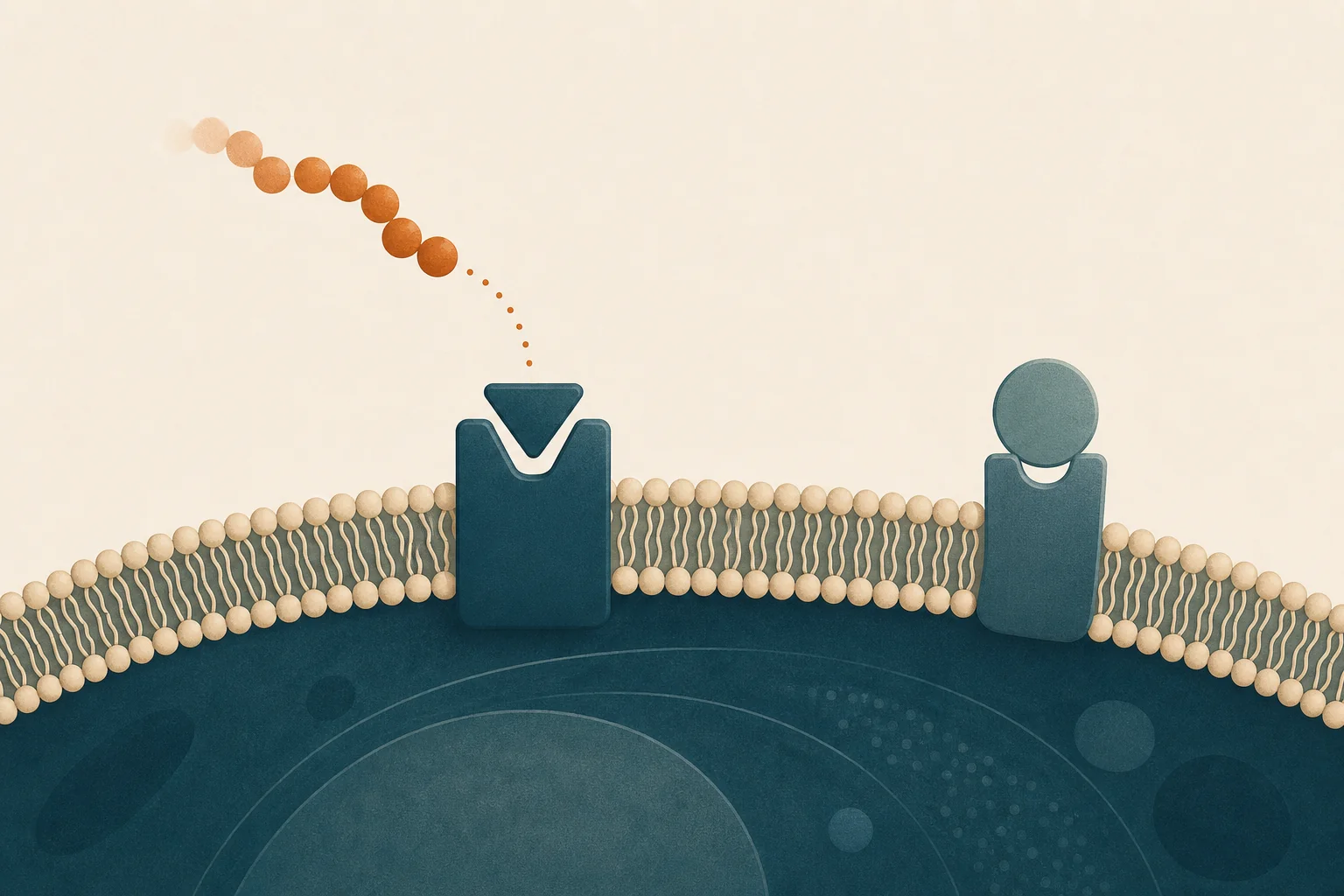
GLP-1 drugs don't suppress your appetite. They restore a hormonal signal your body already produces after every meal — except yours, on these drugs, lasts about ten thousand times longer than the version your gut makes on its own. That is the entire mechanism in one sentence. The rest of this article is the consequences.
What GLP-1 actually is (and where it comes from in your body)
Glucagon-like peptide-1 is a 30-amino-acid peptide hormone produced by L-cells in the distal small intestine and colon. It is released in response to food entering the gut, which is why blood levels spike about fifteen minutes after a meal. The hormone has three jobs: it slows the passage of food from the stomach into the small intestine, it signals satiety to the hypothalamus, and it potentiates insulin secretion from pancreatic beta cells when blood glucose is elevated.
The catch is that endogenous GLP-1 has a half-life of one to two minutes. The enzyme dipeptidyl peptidase-4 (DPP-4) chews it up almost immediately after release. Your body's own GLP-1 system works perfectly well in healthy individuals — but the signal is brief by design.
GLP-1 receptor agonist drugs are engineered to bind the same receptor that endogenous GLP-1 binds, while resisting DPP-4 cleavage. Semaglutide's half-life is about seven days — roughly ten thousand times longer than the molecule it imitates. That is the entire pharmacological advance.
The three things a GLP-1 drug does
The same three jobs your body's own GLP-1 does, sustained continuously instead of briefly.
1. Slows gastric emptying
Food stays in your stomach longer. The conventional measurement is the half-emptying time — how long for half a meal to leave the stomach. On semaglutide at therapeutic doses, half-emptying roughly doubles compared with placebo. The patient experience is feeling full for hours after a meal you would previously have moved past in 45 minutes.
This is also why nausea is the most common side effect during titration. The stomach is being asked to do something it has not done at scale before. The system adapts over weeks; for most patients, nausea recedes substantially by week 8 to 12.
2. Acts on satiety centres in the brain
GLP-1 receptors exist in the hypothalamic arcuate nucleus and several brainstem regions involved in food reward. Agonist drugs cross into the central nervous system in small but biologically active amounts. The clinical correlate is the now-famous reduction in what patients call "food noise" — the intrusive, low-grade mental traffic about what to eat next, when, and how much.
There is a specific neurobiology here. The pro-opiomelanocortin neurons in the arcuate nucleus are activated; the AGRP/NPY neurons that drive food-seeking are suppressed. The patient does not experience this as willpower. It is, mechanistically, the willpower having less to push against.
A 2025 review in the American Journal of Medicine (Mechanisms of GLP-1 RA-Induced Weight Loss) has added a layer to this picture. GLP-1 receptors are also present in the ventral tegmental area and nucleus accumbens — the core of the dopamine reward circuit. When activated, they appear to reduce dopamine release in response to food-related cues, which diminishes the rewarding sensation associated with eating highly palatable foods. This is a distinct mechanism from the hypothalamic satiety signal; it acts on the motivational pull toward food rather than on the feeling of fullness after eating it.
Patients sometimes report a wider quieting effect that tracks with this neurobiology: reduced interest in compulsive buying, decreased alcohol craving, and a general blunting of dopamine-seeking behaviour that previously extended well beyond food. These observations are consistent with the receptor distribution and are the subject of ongoing clinical investigation. They are not approved indications.
3. Stimulates pancreatic insulin (in T2D specifically)
In patients with type 2 diabetes, GLP-1 agonists amplify glucose-dependent insulin secretion — meaning insulin release is triggered when blood glucose is high, but not when it's normal. This is why GLP-1s are unlikely to cause hypoglycaemia on their own (though they can in combination with insulin or sulfonylureas).
In patients without diabetes who use these drugs for weight management, this third effect is biologically active but clinically less central. The first two effects do most of the work. For who qualifies for each approved indication, see our GLP-1 eligibility criteria guide.
Mono-agonist vs dual-agonist vs triple-agonist — the generational shift
Drug classes evolve by adding receptor targets. GLP-1 was the starting point. Each new generation adds another molecular handle on the same metabolic system.
Mono-agonists target only the GLP-1 receptor. Liraglutide (Saxenda, Victoza) was the first practical example; semaglutide (Wegovy, Ozempic, Rybelsus) is the current dominant mono-agonist. The STEP-1 trial of semaglutide 2.4mg produced an average 14.9% weight loss at 68 weeks. Our clinical trials explained guide covers the STEP and SURMOUNT data in depth.
Dual-agonists add GIP — glucose-dependent insulinotropic polypeptide. GIP is another incretin hormone with overlapping but distinct effects on insulin secretion, lipid handling, and central appetite signalling. Tirzepatide (Mounjaro, Zepbound) is the dual agonist in clinical use. The SURMOUNT-1 trial of tirzepatide produced an average 22.5% weight loss at 72 weeks — significantly more than semaglutide in matched populations. For a full head-to-head on the two drugs, see our tirzepatide vs semaglutide comparison.
Triple-agonists add glucagon receptor activity to the GLP-1 + GIP combination. The rationale for glucagon agonism is counterintuitive: glucagon increases energy expenditure (the metabolic rate goes up) even as it nominally raises blood sugar. The other two arms keep glucose handled. Retatrutide (Lilly, Phase 3) is the leading triple agonist. Its Phase 2 readout reported approximately 24% weight loss at 48 weeks. Phase 3 trials are ongoing; NDA filing is expected late 2026.
Why some GLP-1 drugs are weekly and others daily
Half-life. Liraglutide has a half-life of about 13 hours; semaglutide and tirzepatide have half-lives of 5 to 7 days. The longer-acting molecules are engineered with fatty-acid side chains that bind to albumin in the bloodstream, which protects them from kidney clearance and dramatically extends their action window.
For patients, this is a convenience and adherence story. Once-weekly injection is meaningfully easier than daily for most people. Adherence is one of the largest determinants of weight loss outcomes in the real world. Liraglutide's clinical results are weaker partly because daily injection is harder to sustain over years.
The half-life table — every major GLP-1 drug
| Drug | Active ingredient | Half-life | Dose schedule |
|---|---|---|---|
| Wegovy / Ozempic | Semaglutide | ~7 days | Weekly |
| Zepbound / Mounjaro | Tirzepatide | ~5 days | Weekly |
| Rybelsus | Oral semaglutide | ~7 days (oral bioavailability ~1%) | Daily |
| Saxenda / Victoza | Liraglutide | ~13 hours | Daily |
| Trulicity | Dulaglutide | ~5 days | Weekly |
| Bydureon | Extended-release exenatide | ~2 weeks | Weekly |
| Orforglipron (pipeline) | Small-molecule oral GLP-1 | ~29 hours | Daily oral |
Sources: respective FDA labels via DailyMed. Pipeline drug data from Lilly investor releases.
What this means for your day-to-day experience
If you start a GLP-1, three patterns are predictable from the mechanism alone. Our week-by-week results guide maps what most patients experience in the first months of treatment.
Hunger drops within the first week, often before measurable weight change. This is the central satiety effect arriving faster than the gastric-emptying effect builds up. Patients commonly describe a sense of being "released" from food preoccupation. This is real and explained by the brain-level mechanism described above.
Side effects appear at titration steps — the first dose, and every dose increase. The mechanism is the same as the therapeutic effect: gastric emptying slows further, and the gut takes a few weeks to recalibrate. Most clinicians titrate slowly for exactly this reason. Skipping or accelerating titration steps is the single most common cause of intolerable side effects.
Food preferences shift, sometimes dramatically. Patients frequently report that previously craved foods, particularly high-fat, high-sweet combinations, become unappealing or actively aversive. The neuroscience here is not fully settled, but the dopamine-reward signalling around food appears to be dampened along with the hunger signal. This is a feature, not a bug, for weight management. It can also feel disorienting.
How long the drug stays in your system after the last dose
Half-life sets the floor on how quickly the drug clears. After five half-lives, a drug is functionally below biologically active levels.
For semaglutide at a 7-day half-life, five half-lives is 35 days. For tirzepatide at 5 days, it is 25 days. For liraglutide at 13 hours, it is under three days.
This matters for two scenarios: planned pregnancy (the FDA recommends discontinuation at least two months before conception for semaglutide and tirzepatide) and tapering off the medication. The drug's effects taper as the molecule clears; appetite signals return gradually rather than all at once.
For more on tapering specifically — protocols, the maintenance-dose option, and what the literature says about weight regain — see our off-ramp guide once it is published.
What patients notice about the brain effects
The central mechanism produces patient experiences that go well beyond "feeling less hungry." Forum discussions on r/Semaglutide and r/Ozempic surface two recurring patterns worth naming, because they are grounded in the neurobiology described above.
The first is a quieting of compulsive mental loops. Patients with ADHD or compulsive-eating histories describe the change in stark terms: constant sugar cravings simply stopping, impulse-spending behaviour receding, the ability to watch television without simultaneous phone-scrolling returning. One highly upvoted r/Semaglutide account framed it as "my mesolimbic system had been calibrated to a certain level for years, and GLP-1 has reset it." This is not a clinical claim the drug makes; it is the lived correlate of reduced dopamine signalling in reward circuits that are not specific to food.
The second is a question patients raise repeatedly but that clinicians rarely pre-empt: why do I feel a mild crash a day or two after each injection? The answer is the same mechanism in reverse. As each dose peaks and then begins to decay between injections, the dopamine baseline it had been suppressing reasserts itself. For patients with pre-existing dopamine-dysregulation conditions, this oscillation can be particularly noticeable. It resolves with steady-state dosing once therapeutic levels stabilise across the weekly cycle.
Neither of these effects should be interpreted as the drug treating ADHD, addiction, or depression. They are pharmacodynamic consequences of a drug that acts on receptors distributed across the brain's entire motivational architecture. Several trials are underway testing GLP-1 agonists specifically for alcohol use disorder and opioid use disorder; a meta-analysis of 2,071 participants found significant reductions in depression scores. These are investigational findings, not approved claims.
Beyond weight loss: what recent research has found
The mechanism's reach has expanded substantially in the 2024–2025 literature.
Obstructive sleep apnea. Tirzepatide received FDA approval in December 2024 for moderate-to-severe OSA in adults with obesity, based on trial data showing a 62.8% reduction in apnea-hypopnea index and 42–50% clinical remission rates (PMC 12389369). This is the first disease indication for a GLP-1 outside of metabolic conditions.
Neurological effects. The ELAD trial (liraglutide) reported nearly 50% less brain volume loss in frontal, temporal, and parietal regions versus placebo in Alzheimer's patients. Whether this translates to clinical benefit is an open question. Parkinson's data are mixed: LixiPark showed slower motor progression, but the EXENATIDE-PD3 trial found no disease modification effect.
Substance use. A population-level analysis of 503,747 patients with opioid use disorder and 817,309 patients with alcohol use disorder found GLP-1 prescriptions associated with significantly lower rates of opioid overdose and alcohol intoxication. The mechanism hypothesis is the same dopamine-circuit dampening described above. These findings are associational, not causal proof of efficacy.
Muscle loss. Research confirms that 25–45% of total weight lost on GLP-1 therapy comes from lean mass rather than fat. This is not trivial, and it has moved clinicians toward recommending resistance training and adequate protein intake as co-interventions during treatment — not optional add-ons. The drug's mechanism does not selectively target fat tissue; it reduces total caloric intake, and the composition of what is lost follows from diet quality and activity level.
The pipeline — what's coming next
Three molecules are in late-stage development. Each represents a different evolutionary path.
Orforglipron is Lilly's small-molecule, once-daily oral GLP-1. It is not a peptide; it is a chemically distinct molecule that binds the same receptor. Phase 3 ACHIEVE-1 reported 7.9% weight loss at the 36mg dose. FDA action is expected in the second quarter of 2026. If approved, orforglipron would be the first practical oral GLP-1; Rybelsus exists but has ~1% bioavailability and requires elaborate dosing rituals.
CagriSema is Novo Nordisk's combination of semaglutide with cagrilintide, an amylin analogue. Amylin is a separate gut hormone with complementary satiety effects. The REDEFINE-1 trial reported 22.7% weight loss at 68 weeks, meaningfully more than semaglutide alone and comparable to tirzepatide. Novo filed the NDA in December 2025; an advisory committee is expected in late 2026.
Retatrutide is Lilly's GLP-1 + GIP + glucagon triple agonist. Phase 3 trials are ongoing. The Phase 2 result was approximately 24% weight loss at 48 weeks, the highest figure in the GLP-1 class to date. NDA filing is expected in the fourth quarter of 2026; approval is anticipated in late 2027 or early 2028.
The trajectory is clear. Each generation increases efficacy by adding receptor targets and improving pharmacokinetics. Whether the next-generation drugs will displace semaglutide and tirzepatide depends on cost, side-effect profile at higher efficacy, and how insurance coverage shifts — all open questions.
Where to read next
If you are deciding whether a GLP-1 is right for you, the next reading is our Wegovy vs Zepbound comparison. If you are evaluating telehealth providers, start with the provider comparison master. If you are already on a GLP-1 and thinking about coming off, our off-ramp authority hub is the reference, though that content is gated behind our medical reviewer's signoff and publishes once that role is filled.
Methodology: this article reports the mechanism of GLP-1 receptor agonist drugs based on FDA labels, peer-reviewed clinical trial publications, and manufacturer disclosures. It does not constitute medical advice. The article is editorial-only; our medical reviewer has not yet signed off on individual clinical claims. When that review is complete, the page will be re-tagged and clinical recommendations will appear in dedicated drug-comparison and provider-review content. See our editorial policy and methodology page.
Frequently asked questions
Is GLP-1 the same thing as Ozempic?
GLP-1 is the hormone class. Ozempic is one brand of one specific GLP-1 drug — semaglutide, approved for type 2 diabetes. Wegovy is the same molecule at a higher dose, approved for weight management. There are several other GLP-1 drugs from different manufacturers.
How quickly does a GLP-1 drug start working?
Appetite reduction usually begins within the first week, before any measurable weight change. The central satiety effect arrives fastest. Gastric emptying changes build over several weeks. Visible weight loss generally follows by week three or four if dosing is on schedule.
Why does food noise go away on a GLP-1?
GLP-1 receptors exist in brain regions that signal hunger and food reward — the hypothalamus and brainstem in particular. The drugs activate these receptors continuously, dampening the background signals that drive cravings and food-seeking behaviour. Patients commonly describe this as feeling released from mental food traffic.
Do GLP-1 drugs work the same way for diabetes and for weight loss?
The mechanism is identical. Different doses and approved indications reflect what was studied in trials. Semaglutide 2.4mg (Wegovy) was tested for weight loss; semaglutide 1mg (Ozempic) for diabetes. The molecule is the same.
What's the difference between Wegovy and Zepbound at a mechanism level?
Wegovy (semaglutide) targets only the GLP-1 receptor. Zepbound (tirzepatide) targets GLP-1 plus GIP, a second incretin hormone. The dual mechanism is associated with greater weight loss in head-to-head trials. Side effect profiles overlap substantially but are not identical.
How long does the drug stay in my body after my last injection?
Semaglutide reaches biologically inactive levels after about 35 days. Tirzepatide takes about 25 days. Liraglutide is much faster — under three days. This matters for planned pregnancy and for tapering. The drug's effects fade as the molecule clears.
Are there non-injection GLP-1 drugs available?
Rybelsus is oral semaglutide approved for type 2 diabetes, but its bioavailability is approximately 1% and it requires strict fasting around dosing. Orforglipron, Lilly's small-molecule oral GLP-1, completed Phase 3 trials and is expected to receive FDA action in Q2 2026.
What's coming next in the GLP-1 pipeline?
Orforglipron (oral GLP-1, Lilly), CagriSema (GLP-1 + amylin, Novo) and retatrutide (GLP-1 + GIP + glucagon triple agonist, Lilly) are the three near-term candidates. Each adds a different mechanism layer. Retatrutide's Phase 2 result of 24% weight loss is the highest in the class to date.