Where to Get Compounded Semaglutide in 2026: What's Actually Left, and How to Tell Legitimate From Dangerous
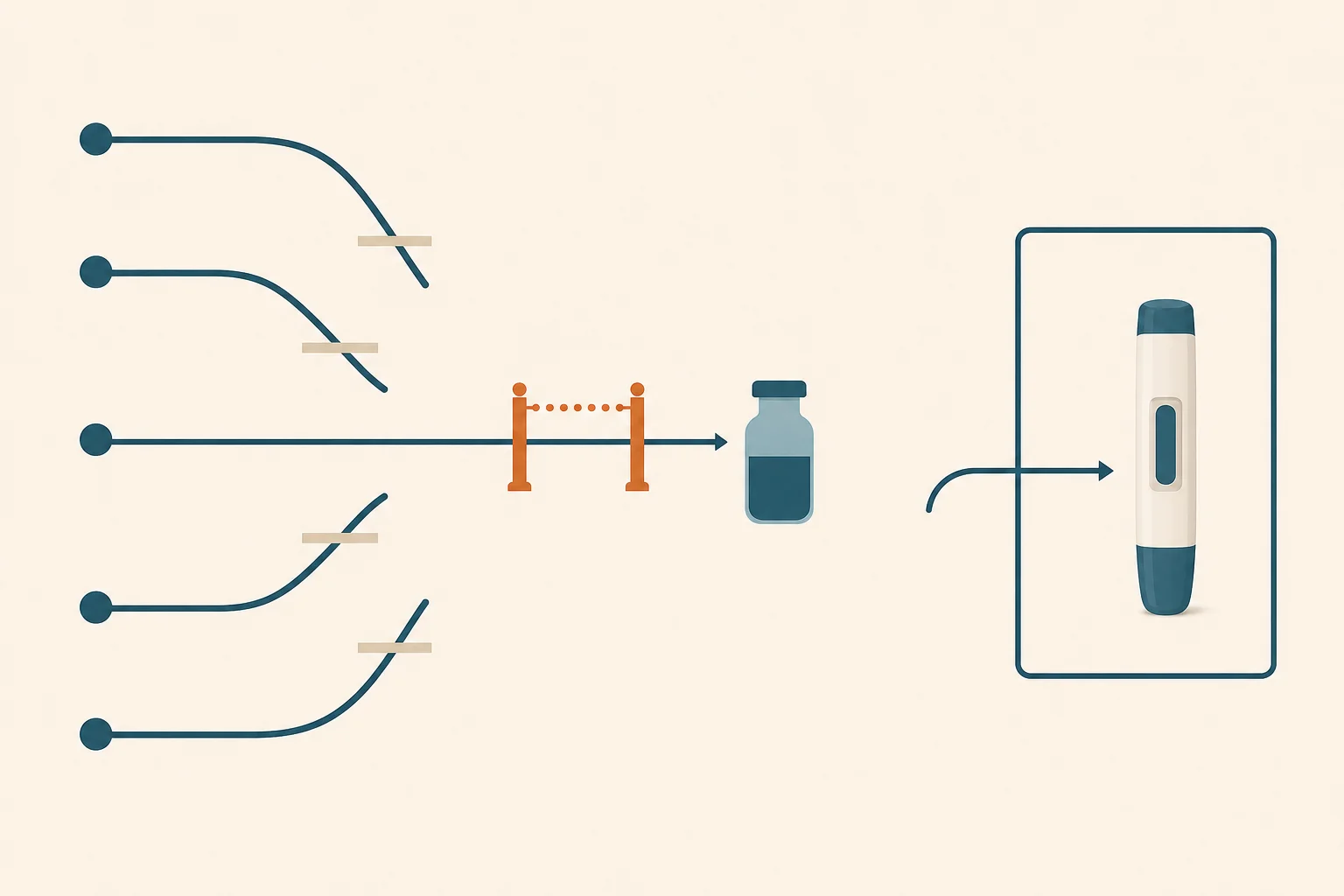
If you have landed here searching for where to buy compounded semaglutide or tirzepatide now, you deserve a straight answer rather than another ad. The honest one: the mass-market era of cheap compounded GLP-1s is over, and most products still advertised as “compounded semaglutide” are not legally compliant under current FDA policy. This page is a map of what actually remains, how to tell a legitimate source from a dangerous one, and the safer routes most people end up taking.
We are an independent publication, not a pharmacy, prescriber, or seller. We do not list vendors to buy from and no provider pays us for coverage. What follows is decision support, not a directory.
The short answer: what changed
For about two years, US pharmacies could legally make compounded copies of semaglutide and tirzepatide because the FDA had declared both in shortage. That window has closed. The FDA declared the tirzepatide shortage resolved in October 2024 and the semaglutide shortage resolved in February 2025, and every enforcement-discretion deadline for compounders expired by May 22, 2025. In 2026 the agency went further, clarifying its policies for compounders and proposing to permanently exclude semaglutide, tirzepatide, and liraglutide from the 503B bulks list — with a public comment period open until June 29, 2026. The full dated timeline is in our FDA compounding-cliff explainer.
The practical result: the broad market that supplied hundreds of thousands of patients at $150–$300 a month is gone, and it is not scheduled to come back.
What narrowly, legitimately remains
Two pathways still exist, both far smaller than the old market.
The §503A(b)(1)(D) personalized-dose exception. A state-licensed pharmacist may still compound for a specific patient when the prescriber documents a genuine medical need that the FDA-approved product cannot meet — for example, a documented allergy to an inactive ingredient, or a dose strength not commercially available. The key constraint, and the part the marketing tends to skip: the compounded product must be meaningfully different from the approved drug and medically necessary for that patient. It is not a lawful route to a cheaper copy of standard-dose Wegovy or Zepbound. As a practical matter, the broad “personalized dose” market is gone; the FDA and the manufacturers argue that much of what is still marketed under that banner stretches the exception, a view echoed by legal analysts tracking the policy. For the framework itself, see 503A vs 503B compounding explained, and for how state regulators are enforcing it, state enforcement against compounded GLP-1s.
A compliant 503B arrangement. Some outsourcing-facility supply may continue in specific situations, though the proposed bulks-list exclusion above is aimed squarely at closing this for these drugs. What a compliant arrangement looks like is covered in switching to a 503B-compliant supply.
If you are weighing either of these, the question is no longer “where is it cheapest” but “is this source operating lawfully and safely.”
How to tell a legitimate source from a dangerous one
Wherever a compounded product is still genuinely on offer, three plain questions separate a legitimate operator from a risky one. They are worth asking before you pay anything:
- “Are you a 503A pharmacy or a 503B facility, and what legal pathway are you using now that the shortage is over?” A legitimate operator knows exactly how its workflow complies and will say so.
- “Can you provide a certificate of analysis for my batch?” This is a standard quality document covering identity, potency, and sterility.
- “Is the active ingredient free-base semaglutide or tirzepatide, or a salt form?” The FDA has warned that salt forms are not the same as the approved active ingredient.
The vetting questions and what good answers look like are covered in more depth in compounded vs brand semaglutide. Treat as warning signs any marketing that calls a compounded product identical to Ozempic or Wegovy, any pressure to pay before these questions are answered, and vagueness about licensure. The provider-by-provider picture for the largest telehealth names is in our status pages for Hims, Mochi, and Henry Meds.
What is never a safe answer
Two “sources” that searches surface are not legitimate options, and it is worth being blunt about them:
- “Research-grade” or “not for human consumption” peptides. These are laboratory chemicals sold outside the medical system, not compounded medicines — no verified identity, purity, or sterility, and no one accountable if they harm you. This is a categorically more dangerous risk than any pharmacy product, and we explain exactly why in is research-grade semaglutide safe?.
- Counterfeit product. The FDA has seized counterfeit semaglutide from the US supply chain. Anything sold without a prescription through an unverified site, an overseas marketplace, or social media should be assumed unsafe.
If the only options you can find are these, the right move is not to buy — it is to look at the legitimate routes below.
The route most people take now
For the majority of patients, the realistic answer in 2026 is no longer compounded at all. Brand cash-pay has come down enough to change the math: Wegovy through NovoCare runs $349/month(as of May 2026) a month and Zepbound vials through LillyDirect start at $299/month. That is still a real cost, but for many it is closer to the old compounded price than expected, and it carries none of the legal or safety uncertainty.
Beyond brand, the other legitimate paths — a compliant §503A provider for a genuine medical need, a different or oral GLP-1, an insurance appeal, or a deliberate taper — are laid out side by side, with costs, in our guide to your choices when a compounded GLP-1 is discontinued. If cost is what is pushing the decision, being priced off a GLP-1 covers how to handle that as safely as possible.
How we keep this page current
This is a moving target. The 503B bulks-list exclusion is in a public comment period until June 29, 2026, and a final rule, a court ruling, or a manufacturer price change could shift the picture. We recheck this page on any relevant FDA action or filing. What it will not do is start listing sellers or framing the gray market as an option.
If you spot an error or a missing source, email [email protected]. We acknowledge corrections within five business days and publish the resolution within fifteen.
This article is editorial and informational only. It is not medical or legal advice, and it is not an endorsement of, or instruction to obtain, any specific product or provider. The legal status of compounded GLP-1s is unsettled and changing. Decisions about medication and sourcing belong to you and a licensed healthcare professional.
Frequently asked questions
Can I still legally buy compounded semaglutide or tirzepatide in 2026?
Only in narrow circumstances. Mass-market compounded copies at standard doses are no longer permitted now that the FDA has declared the shortages resolved and all enforcement-discretion windows have closed. A limited amount of compounding continues under the §503A(b)(1)(D) personalized-dose exception, where a state-licensed pharmacist compounds for a specific patient with a documented medical need — such as an allergy to an inactive ingredient, or a dose strength not commercially available — and the product must be meaningfully different from the approved drug. That is not a pathway to a cheaper version of Wegovy or Zepbound, and the FDA says most products still marketed as compounded GLP-1s are not compliant.
Is the "personalized dose" offered by telehealth providers a legal way to keep getting it cheaply?
Be skeptical. The §503A(b)(1)(D) exception is real, but it is meant for genuine, documented medical need, not as a workaround to keep selling a cheaper copy at standard doses. The FDA, Novo Nordisk, and Eli Lilly contend that much of the 'personalized dose' marketing stretches the exception, and state pharmacy boards and attorneys general have taken enforcement action. If a provider frames a personalized dose as simply a cheaper route to the same thing everyone else gets, treat that as a warning sign rather than a loophole.
How do I tell a legitimate compounding source from a dangerous one?
Ask three plain questions and watch how they are answered. First, is the pharmacy a state-licensed 503A pharmacy or an FDA-registered 503B outsourcing facility, and what legal pathway are they using now that the shortage is over? Second, can they provide a certificate of analysis for your batch? Third, is the active ingredient free-base semaglutide or tirzepatide rather than a salt form? A legitimate operator answers all three directly. Marketing that calls a product identical to Ozempic or Wegovy, pressure to pay before those questions are answered, or vagueness about licensure are all red flags.
What about cheap "research-grade" peptides sold online — aren't those compounded too?
No, and this is the most important distinction on this page. 'Research-grade' or 'not for human consumption' peptides are not compounded medicines from a licensed pharmacy — they are laboratory chemicals sold outside the medical system, with no verified identity, purity, or sterility and no one accountable if they harm you. Independent testing has found contents far below the labelled purity, contamination, and sometimes the wrong peptide entirely. We explain why in detail in our guide on whether research-grade semaglutide is safe. It is a different and far more dangerous category than a compliant compounded product.
If compounded is mostly gone, what is my realistic option now?
For most people it is brand cash-pay, which is more affordable than it was during the compounding boom — Wegovy through NovoCare and Zepbound vials through LillyDirect both cut the price gap. Beyond that, a compliant §503A provider for a genuine medical need, a different or oral GLP-1, an insurance prior-authorization appeal, or a deliberate taper are all on the table. Our guide to your choices when a compounded GLP-1 is discontinued lays every legitimate path side by side with what each costs.